
Bookkeeping vs accounting is a common question for small business owners. The two words often get used as if they mean the same thing. They do not. They are related, but they are different jobs.
The difference matters when you are deciding what help to get. Do you need a bookkeeper, an accountant, or both? Which one do you need first? The answer depends on your stage and your goals.
A quick note before we start. The words are sometimes used loosely. Some people say accounting when they mean bookkeeping, and the reverse happens too. That is fine in casual talk. When you are hiring or budgeting, the difference is worth getting right.
This guide explains bookkeeping vs accounting in plain English. We define each one, show the key differences in a side-by-side table, and cover which you need and when. We also explain how the two work together. You can see our bookkeeping services if you want a hand with the day-to-day side.
Bookkeeping defined
Bookkeeping is the daily work of recording your money. It is the process of tracking every transaction your business makes.
The U.S. Bureau of Labor Statistics describes bookkeeping clerks as workers who compute, classify, and record financial data to keep accurate records (BLS). In plain terms, a bookkeeper keeps your books current and correct.
Here is what bookkeeping usually covers. Recording sales and expenses. Categorizing each transaction. Reconciling bank and card accounts. Tracking invoices and bills. Running basic reports, like a profit and loss statement.
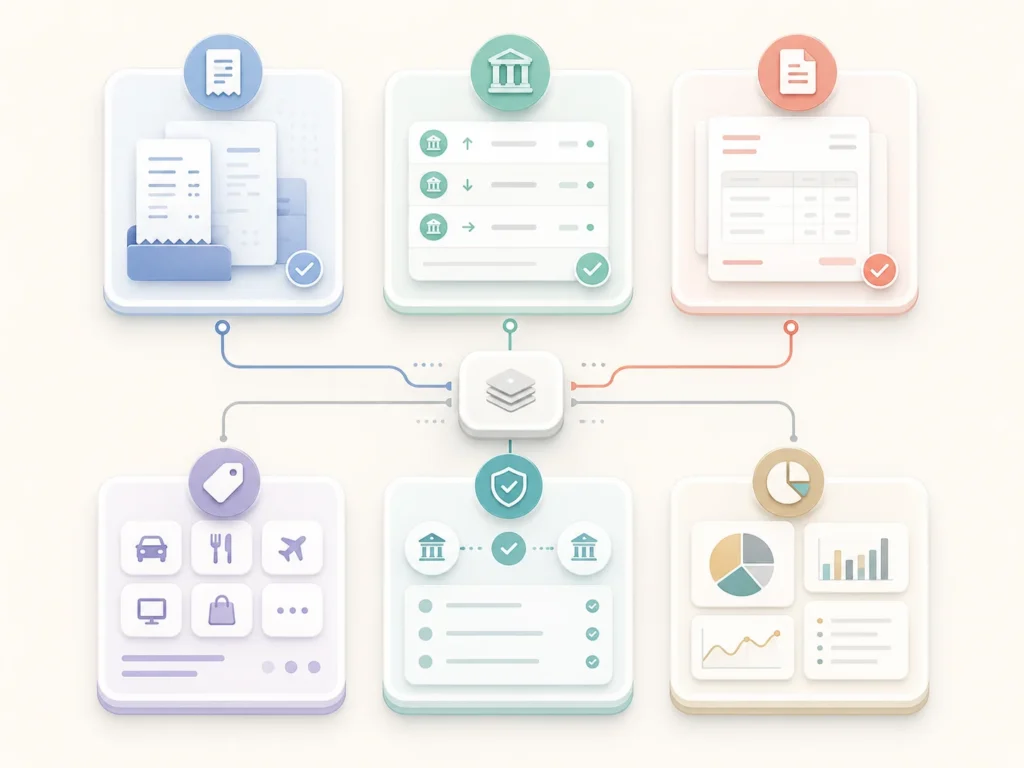
Think of bookkeeping as the foundation. It captures what happened, day by day. Every sale, every payment, and every deposit gets recorded in a consistent way.
Say you run a small shop. Each week you have sales, supplier bills, and a few refunds. Bookkeeping is the work of recording all of that and making sure it matches your bank. Done well, it gives you a clean record you can rely on.
Most bookkeeping today runs on software. Cloud tools connect to your bank and pull in transactions. The bookkeeper reviews and codes each one. The software does the math, but a person still has to make sure it is right.
Cadence matters as much as accuracy. Books that are updated weekly are far more useful than books touched once a year. A steady rhythm keeps small errors from piling up into a big mess.
A bookkeeper also spots everyday problems. A missing deposit. A double charge. A bill that does not match the delivery. Catching these early is part of the job, and it helps protect your cash.
Good bookkeeping keeps your records accurate and current. Depending on the service, a bookkeeper may also prepare reports, flag unusual activity, and explain basic trends. Deeper financial analysis and strategy usually sit on the accounting side.
Many bookkeepers do not prepare income-tax returns or give tax advice, but services vary. Some handle payroll-tax or sales-tax filings. For income-tax preparation or strategy, check the provider’s qualifications, experience, and credentials.
Bookkeeping also feeds your key reports. A clean set of books can produce a profit and loss statement, a balance sheet, and a cash summary. These are basic reports, but they only hold up if the underlying records are correct.
Accounting defined
Accounting is the work of interpreting your numbers. It takes the records a bookkeeper keeps and turns them into insight.
The U.S. Bureau of Labor Statistics describes accountants as professionals who prepare and examine financial records, and who usually need a bachelor’s degree (BLS). Where bookkeeping records the data, accounting analyzes it.
Accounting usually covers a wider set of work. Preparing and reviewing financial statements. Analyzing trends and performance. Advising on tax strategy. Preparing and filing tax returns. Helping with budgets and big financial decisions.

Accounting answers the bigger questions. Are you profitable? Where is the money going? How can you lower your tax bill within the rules? What do the numbers say about next year?
Not every accountant is a CPA. A CPA, or Certified Public Accountant, is a licensed credential. In Texas, a CPA is licensed by the Texas State Board of Public Accountancy. Applicants must meet the Board’s current education, examination, ethics, and supervised-experience requirements, and Texas introduces a second certification pathway on August 1, 2026 (Texas State Board of Public Accountancy). In Texas, regulated attest services, such as audits, reviews, and certain assurance engagements, must be performed through a properly licensed CPA firm. Not every CPA or accounting firm offers attest services.
Accounting comes in a few forms. Tax accounting focuses on returns and tax strategy. Management accounting focuses on reports that help you run the business. Audit and assurance work checks that financial statements are accurate and fair.
For a small business, tax accounting is often the first accounting need. You want your returns filed correctly and your tax bill kept in line with the law. As you grow, management accounting helps you plan and make decisions.
A CPA carries extra weight because of the license. The credential signals training, testing, and ongoing standards. For audits, lender requirements, or complex tax questions, that license can matter. For simpler needs, a non-CPA accountant may be a fine fit.
One more point on scope. Accountants often look backward and forward. They report on what already happened, and they help you plan what comes next. Budgets, forecasts, and tax strategy all live on the accounting side.
Bookkeeping is a core part of the accounting process. It creates the detailed records that accountants use for reporting, compliance, analysis, and planning. Without those records, that work gets much harder.
Key differences
The table below compares the two roles side by side.
| Aspect | Bookkeeping | Accounting |
|---|---|---|
| Main role | Maintain accurate transaction-level records | Report, analyze, advise, and support compliance |
| Typical work | Categorization, reconciliation, invoices, bills, payroll support | Financial reporting, tax work, forecasting, analysis, and advisory |
| Output | Current books and routine reports | Financial statements, tax filings, forecasts, analysis, or attest reports |
| Main question | What happened, and was it recorded correctly? | What does it mean, and what reporting or action is needed? |
| Credentials | No general state license is normally required; optional certifications exist | A CPA is state licensed; other qualifications depend on the service |

In short, bookkeeping records the numbers and accounting explains them. But the roles overlap in practice, and many providers cover parts of both.
Neither one replaces the other. A strong accountant still needs clean books to work from. A strong bookkeeper still leaves tax strategy to an accountant. You get the full value when both are in place.
Which you need and when
For many small businesses, bookkeeping is the first ongoing need. However, some businesses need an accountant or CPA early for tax setup, entity decisions, financing, or complex reporting. In many cases, the best arrangement is ongoing bookkeeping with periodic accounting support.
Here is why the ongoing side matters. Accounting depends on good records. An accountant cannot analyze your business or file taxes well from messy books. Bad data in means bad results out. So the daily record has to stay current.
In the early stage, many owners start with bookkeeping alone. It might be you, a staff member, or an outside bookkeeper. The goal is to keep the records accurate and current.
As you grow, the accounting side becomes more important. You may want tax planning, not just tax filing. You may want to read your financial statements and act on them. That is when an accountant or CPA earns their keep.
Some owners use both from the start. A bookkeeper handles the day-to-day. An accountant or CPA handles taxes and strategy. The two roles do not compete. They cover different needs.
How do you know when it is time to add an accountant? A few signs are common. Your taxes are getting complex. You are making bigger financial decisions. You want to plan ahead, not just react. You are seeking a loan or investors who want reliable statements.
This table matches common situations to the kind of help worth considering.
| Situation | Help to consider |
|---|---|
| Bank accounts are not reconciled | Bookkeeper |
| Transactions are months behind | Bookkeeper |
| Customer invoices and vendor bills need tracking | Bookkeeper |
| You need an entity or tax-election decision | Accountant or CPA |
| You received a complex tax notice | Qualified tax professional |
| A lender requests reviewed or audited statements | Licensed CPA firm |
| You need ongoing records and quarterly planning | Both |

Cost is part of the decision too. Cost depends on the provider, service scope, transaction volume, and complexity. Clean records can reduce the time a tax or accounting professional spends correcting past work.
It also helps to think in stages. At the start, focus on getting the records right. As money and complexity grow, add tax help. When decisions get bigger, lean on an accountant or CPA for strategy. Each stage builds on the one before it.
Texas adds its own rhythm to this. Most Texas businesses have annual franchise tax or information-report duties, and required Franchise Tax Reports are generally due May 15. A bookkeeper keeps the records ready for those filings. An accountant or tax pro usually handles the reports themselves. It is a good example of the two roles meeting in practice.
For a brand new business, the starting point is basic. Set up your accounts, pick your software, and start recording from day one. Good habits early make every later step easier.
If you want the full picture of small business bookkeeping, see our pillar guide. It walks through the whole system, step by step.
There is no single right answer for every business. The right mix depends on your size, your goals, and how complex your finances are. Whatever mix you choose, current and accurate records make every other step easier.
How they work together
Bookkeeping and accounting are not rivals. They are two parts of one system. They work best together.
Picture the flow. The bookkeeper records transactions all month. At month end, the books are closed and cleaned. Then the accountant uses those records to prepare reports, plan taxes, and advise.
When the two connect well, you get the best of both. Accurate daily records and smart, big-picture guidance. Your numbers end up both correct and useful.
Communication is what makes it work. The bookkeeper and the accountant should work from the same accurate data. When they do, tax time is smoother and your reports are reliable.
This is also why the handoff matters. Well-kept books make the accountant’s job faster and often cheaper. Messy books slow everything down and can cost you more. Good daily records pay off up the chain.
A typical monthly cycle looks like this. During the month, the bookkeeper records and reconciles. At month end, they close the books and send the reports. Each quarter or year, the accountant reviews those reports, plans taxes, and files returns. The cycle repeats, and it stays smooth when the data is clean.

Roles can also blend. Some firms offer both bookkeeping and accounting under one roof. Some owners keep them separate. Either way, the principle holds. The record has to be clean before the analysis can be trusted.
For a small business, a common setup is steady bookkeeping plus accounting support that fits your stage. Together they give you a clear, trustworthy view of your business.
Do not treat this as one or the other. The two roles cover different needs, and most growing businesses end up using both, working together over time.
Our approach
We focus on the bookkeeping side, and we make it fit the rest of your financial picture. Our goal is clean, current books you can trust.
Tax by Lonestar works with small businesses in Collin County and across North Texas. We keep your day-to-day records accurate and ready for whoever handles your taxes.
We also work well alongside others. If you already have an accountant or CPA, we keep your books in shape so their work is easier. If you do not have one yet, we can help you understand what you need.
We keep the process simple. You give us access to your accounts. We handle the recording and reconciling. You get current books and clear reports on a regular schedule, without the daily work landing on you. We set that schedule with you, whether that is weekly or monthly.
In a free consultation, we look at where your books stand today and talk through what solid bookkeeping would take for your business. Contact us to set one up.
This guide is general information, not tax, accounting, or financial advice. The right setup depends on your situation. For advice on your business, talk to a qualified bookkeeper, accountant, or CPA.