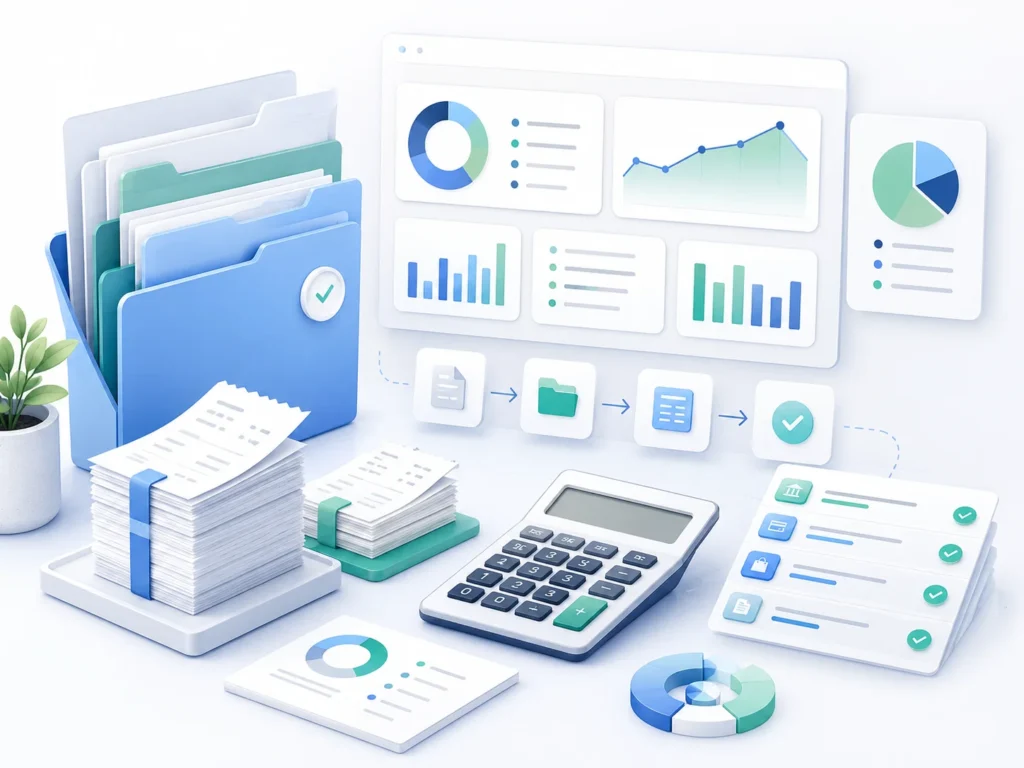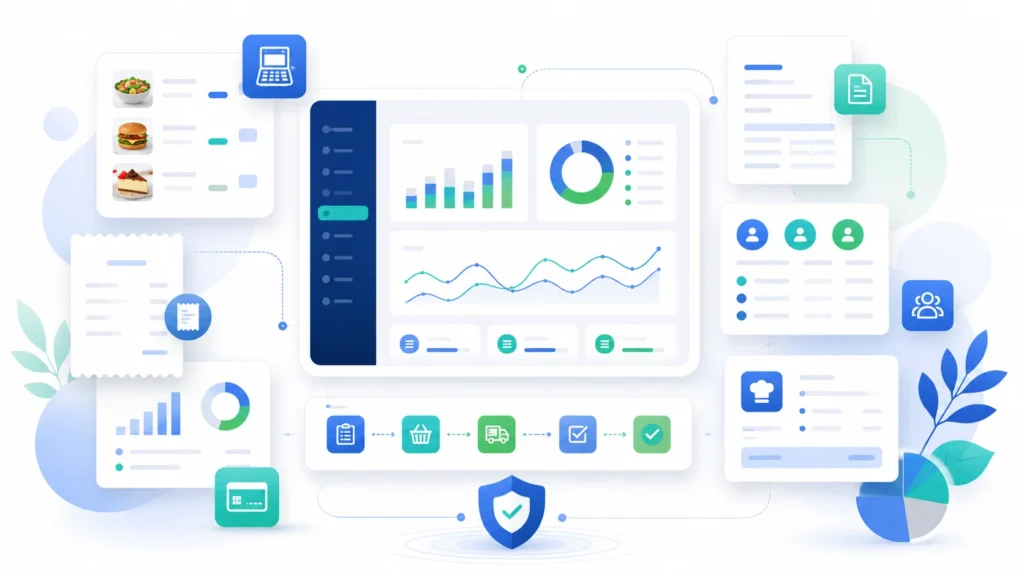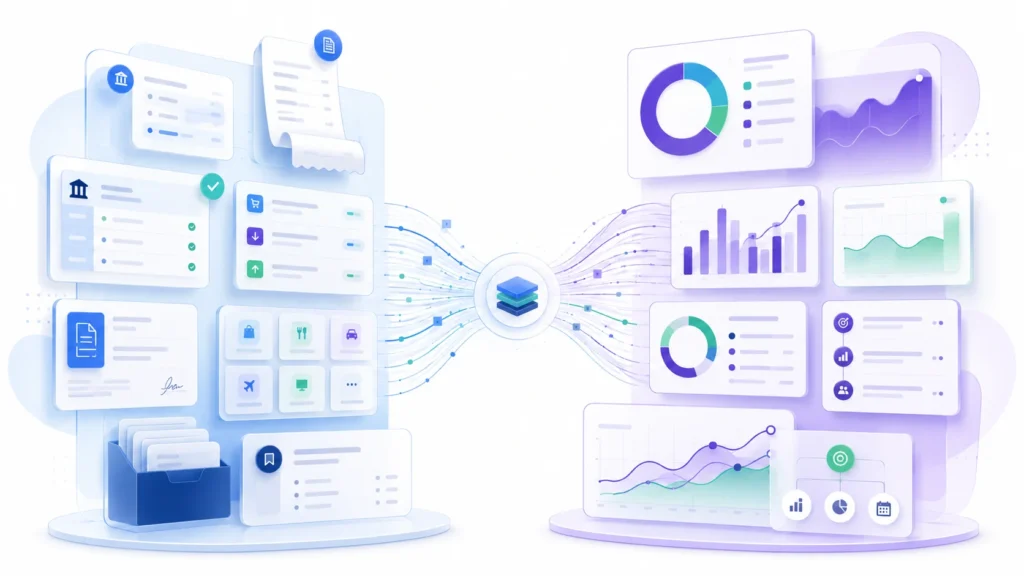
Restaurant bookkeeping in Collin County means managing daily sales, changing food costs, tipped payroll, and Texas tax rules. Restaurant bookkeeping is often more complex than bookkeeping for many service businesses. The pace can be faster, and the margins can be tighter. Your books have to keep up with all of it.
Good books do more than track money. They show your food cost, your labor cost, and your profit for each period. They keep you ready for sales tax and payroll deadlines. They help you catch problems while you can still fix them.
This guide explains how restaurant bookkeeping works, step by step. It covers daily sales, cost percentages, tips, vendor bills, and the monthly close. It also covers a few Texas rules that Collin County restaurants deal with. It is a practical guide, not a full accounting course, so it points you to the parts that matter most. You can also see our bookkeeping services if you would rather hand it off.
Why restaurants are different
Restaurant bookkeeping often involves more daily transactions and payment sources than many service businesses. You may run hundreds of transactions in one shift. Cash, cards, gift cards, and third-party apps all come in at once.
Your costs move fast too. Food and labor are usually two of a restaurant’s largest controllable costs. Food changes with prices and waste. Labor shifts with every schedule. Small changes in either one can eat your profit.
Timing adds another layer. Money comes in daily, but big bills land later. Vendor invoices, rent, and payroll do not line up with your daily deposits. Without clean books, that gap is easy to miss.
Taxes are more complex as well. In Texas, prepared food and restaurant meals are taxable, and the combined sales tax rate can reach 8.25% (Texas Comptroller). If you serve alcohol under a mixed beverage permit, you may owe two more Texas taxes: a 6.7% mixed beverage gross receipts tax that you pay, and an 8.25% mixed beverage sales tax that your customers pay (Texas Comptroller). Both mixed beverage tax reports must be filed monthly and are due by the 20th of the following month.
Alcohol tax treatment depends on the permit type and whether the sale is for on-premises or off-premises consumption. Some wine and malt beverage permit holders pay only regular sales tax. Qualifying mixed beverage permittees may owe both mixed beverage taxes.
One local point matters here. Your sales tax rate depends on your exact address. Collin County includes cities such as Allen, Plano, Frisco, and McKinney, and local rates can differ by location. Check the current rate for your restaurant’s address with the Texas Comptroller. If you run more than one location, each address may have its own rate.
This is why restaurant bookkeeping is its own skill. The basics are the same, but the pace, the costs, and the rules are not. A restaurant needs books built for how a restaurant actually runs.
A daily, weekly, and monthly routine
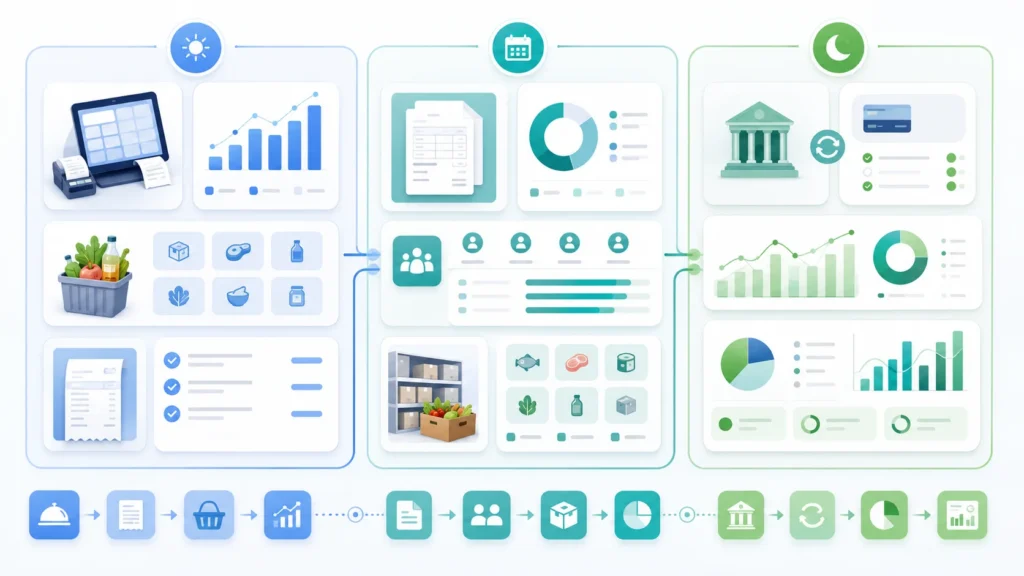
Clean restaurant books come from a steady routine. Here is a simple way to split the work.
| When | Bookkeeping tasks |
|---|---|
| Daily | Reconcile POS sales to deposits. Record cash, cards, gift cards, and third-party app sales. Log sales tax collected and tips. |
| Weekly | Review food and labor cost. Enter and check vendor invoices. Run payroll and record tips. |
| Monthly | Count inventory. Reconcile bank and card accounts. Close the books and review your profit and loss. File sales tax according to your assigned filing schedule. File monthly mixed beverage reports by the 20th of the following month. |
The rest of this guide walks through these tasks in more detail.
Daily sales reconciliation
Daily sales reconciliation is the heart of restaurant bookkeeping. It means matching what your POS says you sold against the money you actually received.
Here is the idea. At the end of each day, your point of sale system reports total sales. It breaks that down into cash, card, gift cards, and other tenders. You then check that the money landed where it should.
Cash sales should match the ending drawer balance after subtracting the starting cash and adjusting for paid-outs, cash tips, refunds, and deposits. POS card sales should match the processor’s batch total. The bank deposit may be different because of processing fees, chargebacks, tip adjustments, or settlement timing. Any third-party app sales, like delivery orders, should tie out too. When something does not match, you find it the same day.
This daily habit matters for a few reasons. It catches register errors and missing cash early. It flags deposits that never made it to the bank. It also keeps your sales tax records clean, because you track taxable sales as you go.
A common approach is a daily sales journal. Each day becomes one clean entry. It records total sales, sales tax collected, tips, and each form of payment. Over a month, those entries add up to books you can trust.
Third-party delivery apps deserve special care. These apps pay you after they take their fees. The sale, the fee, and the payout all need to be recorded. If you only book the payout, your sales look too low and your fees disappear. Clean reconciliation captures all three.
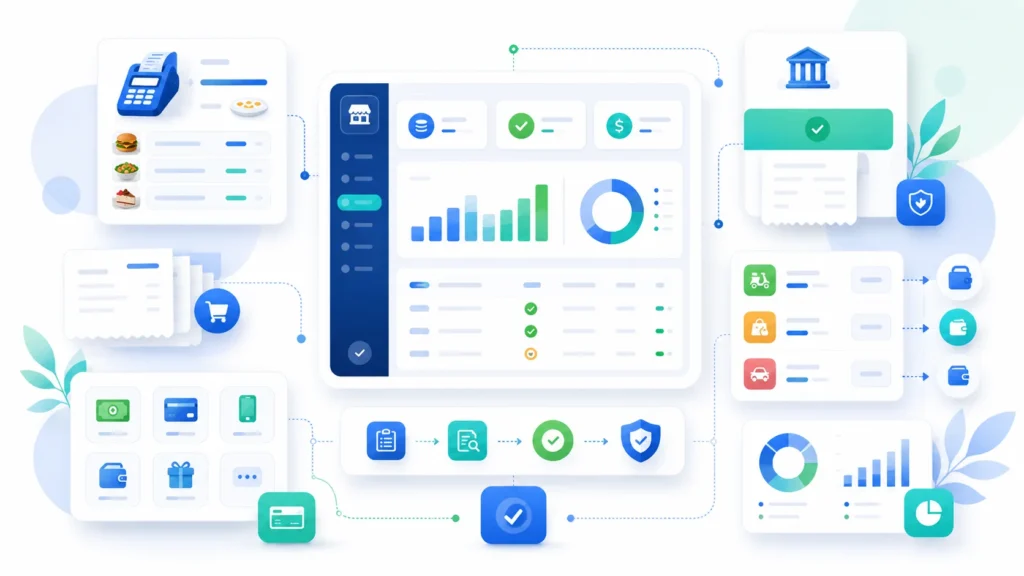
Gift cards need their own treatment. A gift-card sale is generally recorded as a liability, not as revenue right away. You recognize the revenue when the customer redeems the card, based on your accounting policy and the applicable rules. In Texas, sales tax is not charged when you sell a gift card. Tax applies when the card is redeemed for a taxable meal (Texas Comptroller). Your daily reconciliation should track gift cards sold and gift cards redeemed as separate items.
Skip this step and the whole system gets shaky. Deposits drift. Sales tax gets fuzzy. You lose the daily view that tells you how the restaurant is really doing. Daily reconciliation keeps all of that tight.
Food and labor cost percentages
Two numbers drive restaurant profit. Food cost and labor cost. Together they make up what many owners call prime cost.
Food cost is your cost of goods sold, or COGS. It is what you spend on the food and drinks you sell. Food cost percentage compares that spend to your sales. You find it by dividing food cost by sales for the same period.
But food cost is not just what you bought this month. It is what you actually used. The formula is: beginning inventory plus purchases minus ending inventory equals the food you used in the period. That used amount is your true COGS.
Labor cost works the same way. It is your total labor spend divided by sales. It includes wages, payroll taxes, and often benefits. Prime cost simply adds food cost and labor cost together.
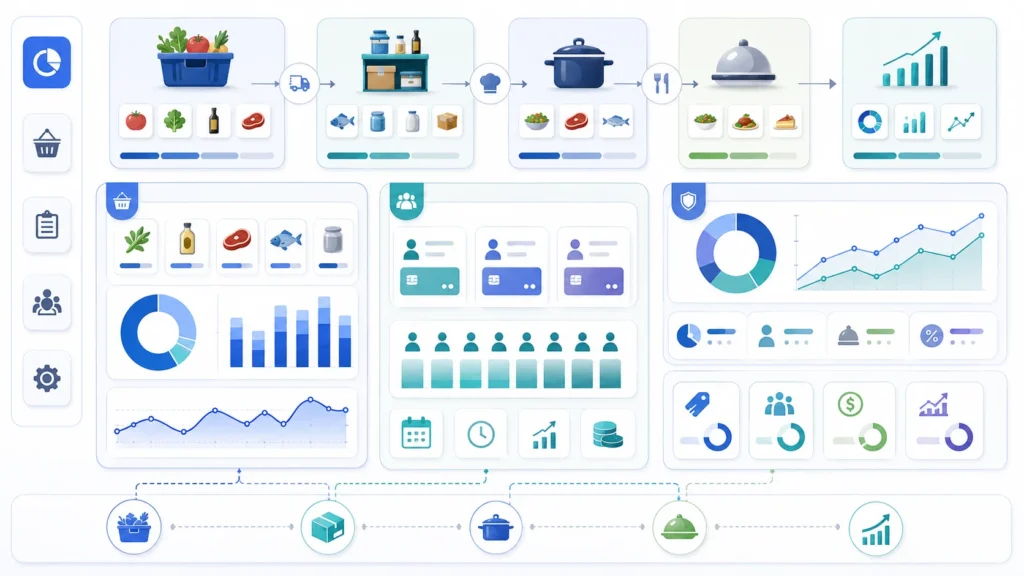
Why track these as percentages? Because dollars alone do not tell the story. A busy month can have high food spend and still be healthy. The percentage shows whether your costs are in line with your sales.
Target percentages vary by concept. A pizza shop, a fine dining room, and a bar all look different. There is no single right number for every restaurant. What matters is that you know yours and watch the trend over time.
Many restaurants check these numbers weekly, not just monthly. A weekly food and labor review catches trouble faster. You can adjust ordering or scheduling before a bad trend runs all month. Your bookkeeping gives you the data to do it.
When you track prime cost each period, problems show up early. A creeping food cost can point to waste, theft, or portion drift. A rising labor cost can point to overstaffing. You cannot fix what you cannot see.
Tips and payroll
Tipped staff make restaurant payroll more complex. The tips have to be tracked, reported, and taxed the right way. Good books keep all of it straight.
Employees who receive $20 or more in cash tips during a calendar month generally must report them to their employer by the tenth day of the following month (IRS Topic 761). As the employer, you then withhold income tax, Social Security, and Medicare on those reported tips.
One detail trips up many owners. A service charge is not a tip. When you add an automatic charge, such as an 18% charge for large parties, the IRS treats it as wages, not a tip (IRS Topic 761). That changes how you record and tax it. Clean books keep tips and service charges separate.
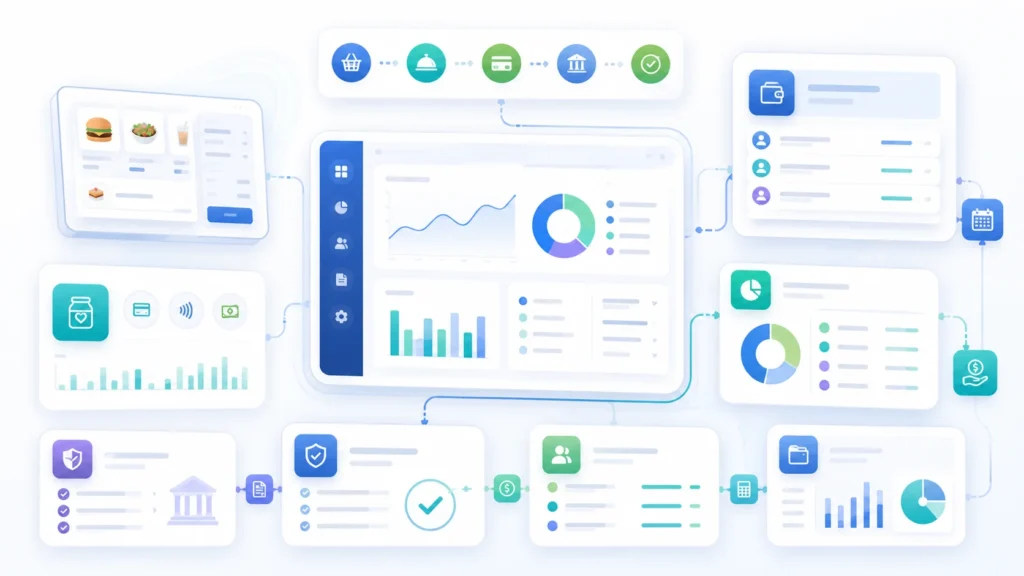
Certain larger food and beverage establishments must file Form 8027 each year. The IRS uses a specific employee-hours test to decide whether the requirement applies. If reported tips fall below 8% of applicable gross receipts, or an approved lower rate, the employer may need to allocate the difference to employees.
There is a possible upside too. Employers who pay Social Security and Medicare tax on employee tips may be able to claim the FICA tip credit on Form 8846. Accurate tip records are what make that credit possible.
All of this runs through payroll. For a deeper look, see our guide to payroll for tipped employees. Tip and payroll tax rules can change, so confirm the current IRS guidance or check with your tax pro. The point for your books stays simple. Track tips daily, report them correctly, and keep the records clean.
Vendor and AP management
Restaurants run on vendors. Food suppliers, beverage distributors, linen services, and more. Accounts payable, or AP, is how you track and pay those bills. It is a big part of restaurant bookkeeping.
The volume is the challenge. You may get invoices several times a week from many vendors. Some arrive with each delivery. Prices change often. If you do not track them closely, bills slip and errors creep in.
Good AP starts at delivery. You check each invoice against what actually arrived. You confirm the price and the count. Then you enter the bill and schedule it for payment. This catches overcharges and short deliveries before you pay.
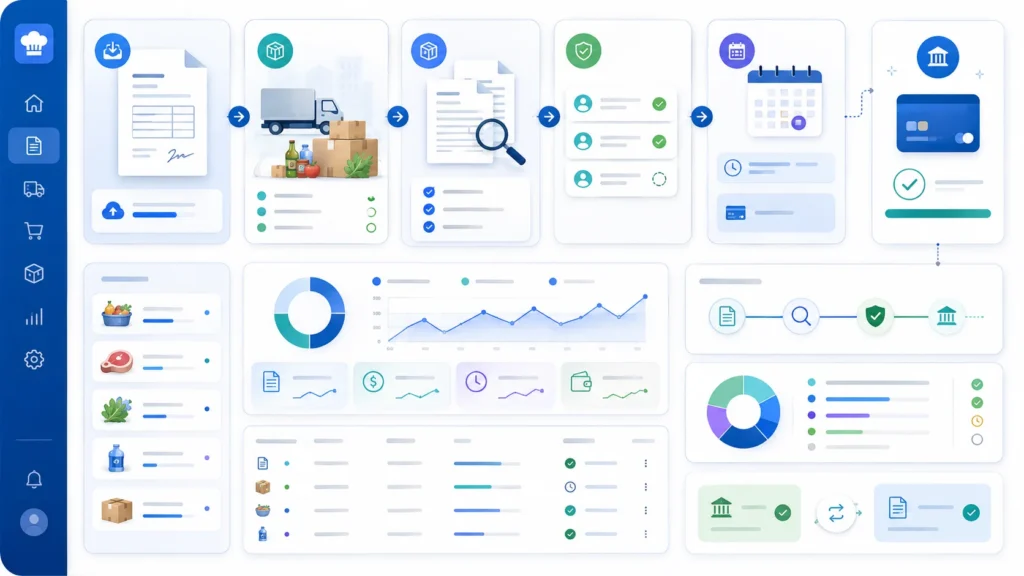
Timing matters here too. You want to pay vendors on time without draining your cash. A clear AP list shows what is due and when. That lets you plan payments around your slower days and your deposits.
AP also feeds your food cost. Your vendor bills are the raw data behind your COGS. When AP is clean and current, your food cost percentage is accurate. When it is messy, every cost number downstream is off.
Many restaurants also watch vendor trends. If one supplier keeps raising prices, clean AP records make it easy to spot. That gives you room to renegotiate or switch. Your books become a tool, not just a record.
Monthly close for restaurants
The monthly close is where it all comes together. It is the routine that turns a month of daily entries into clean financial statements.
A restaurant close has a few key steps. You confirm every day is reconciled. You enter and match all vendor bills. You count inventory so your food cost is accurate. You reconcile your bank and card accounts. Then you review the numbers.
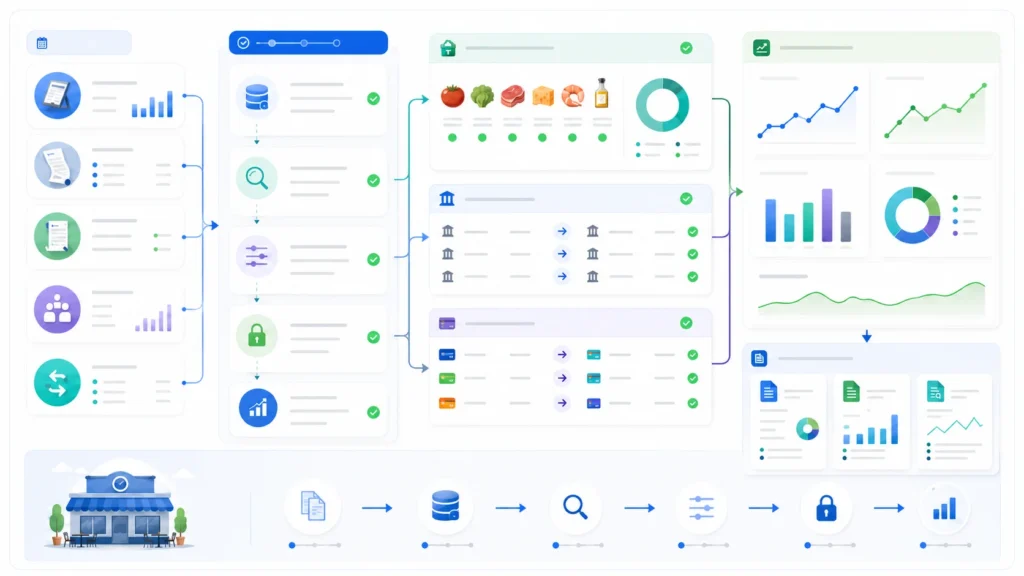
Inventory is the step many owners skip, and it matters most. Your true food cost depends on what you used, not just what you bought. Counting inventory at month end fixes that. It turns a rough guess into a real number.
Once the close is done, you get real reports. A profit and loss statement shows sales, costs, and profit for the month. It shows your food cost and labor cost as percentages. You can compare this month to the last one and spot the trend.
These reports also keep you ready for tax time. Your sales tax ties back to clean sales records. Your payroll taxes tie back to clean payroll. When deadlines come, your monthly financial statements are already in place.
A steady monthly close is what separates a guessing owner from an informed one. It takes discipline, but it pays off. You end each month knowing exactly where the restaurant stands.
What else your books should track
This guide covers the core of restaurant bookkeeping. A few more areas matter as your restaurant grows. Keep these on your radar:
- A clear chart of accounts built for restaurants
- Merchant processing fees and chargebacks
- Comps, discounts, and refunds
- Cash over and short
- Sales tax reconciliation each period
- Payroll clearing accounts
- Multiple locations across Collin County cities
- Fixed assets, such as kitchen equipment
- Cash flow forecasting
You do not have to master all of these at once. Start with the core routine above, then layer these in as you go.
Do you need help with restaurant bookkeeping in Collin County?
Restaurant books are a lot to manage. Daily sales reconciliation. Food and labor cost tracking. Tips and payroll. Vendor bills. A full monthly close. On top of running the floor and the kitchen, it is a heavy load.
Some owners handle it in house with the right tools and a set routine. Others bring in help so they can focus on the restaurant. There is no single right answer. The goal is clean, current books you can trust.
If your books feel behind, or your food cost is a mystery, that is worth addressing. Clean restaurant bookkeeping gives you numbers you can act on.
This guide is general information, not tax, payroll, or accounting advice. Tax rules change and depend on your situation. For advice on your restaurant, talk to a qualified bookkeeper, accountant, or CPA.
Book a free bookkeeping consultation
Tax by Lonestar helps restaurants and small businesses in Collin County keep clean, current books.
In a free consultation, we look at where your books stand today. We talk through your daily sales, food cost, and payroll, then outline what clean restaurant bookkeeping would take for your business. Contact us to set one up.