
Need a bookkeeper in Allen TX? Many small business owners manage their own books at first. It may work well for a while. However, as the business grows, transactions become harder to track and financial records can start falling behind.
Most small business owners in Allen don’t wake up one day and decide they need a bookkeeper. The signal builds slowly — a few late nights wrestling with QuickBooks, a tax return that costs more than expected, a banker who asks for numbers you can’t quickly produce. By the time the decision feels urgent, the business has usually been ready for help for six to twelve months.
This post covers the five signs we see most often when Allen-area owners reach out to us for bookkeeping help. None of them are dramatic. They’re the quiet, accumulating problems that turn small bookkeeping issues into expensive year-end cleanups. If two or more sound familiar, your business is likely ready for a different setup.
We’re a tax and bookkeeping firm based in Allen, TX. The patterns below come from what we see across the small businesses we work with in Collin County and the wider DFW metro.
Sign 1: You’re spending more than 4 hours a week on the books
Wondering if your Allen, TX business needs a bookkeeper? You are not alone. Most small business owners handle their own books at the start. It works fine for a while. Then the business grows. The numbers get harder to track, and the books start to slip.
The question comes up at different times. Some owners ask after a stressful tax season. Some ask when cash gets tight. Some ask when they realize they have not looked at their numbers in weeks. However it starts, the doubt is worth listening to.
This guide walks through five clear signs your Allen, TX business needs a bookkeeper. Each sign is a real problem owners run into. At the end, we explain what professional bookkeeping can fix. That way you can decide if the help is worth it for you.
Not every business needs a full-time bookkeeper. Many owners start with monthly help and grow from there. The goal is simple. Get clean books without losing your own time to them.
Sign 1: Your books are always behind

Start with the simplest sign. Your books are never up to date.
You plan to reconcile the bank account each week. Then a busy stretch hits. Receipts pile up in a drawer or an inbox. Bank transactions sit uncategorized. Before you know it, you are two or three months behind.
Say you run a small service business in Allen. You are booked solid all month, which is great. But the books are the last thing you touch. By the time you sit down, you are staring at hundreds of transactions you barely remember.
Outdated books cause real problems. You cannot see how the business is doing right now. You only see the past. And old numbers make every decision harder.
Late books also hide mistakes. A double charge, a missed invoice, or a wrong category can sit for weeks. The longer they sit, the harder they are to trace and fix.
There is also a cost to catching up later. When books sit for months, cleaning them up is real work. You or a pro has to rebuild the trail from old statements. It is usually slower and may cost more than keeping the books current.
A bookkeeper keeps your records current. They reconcile your accounts on a set schedule. They catch odd transactions early, while the details are still fresh. You always know where your business stands.
If you cannot remember the last time your books were current, do not brush it off. It may be time to hire a bookkeeper.
Sign 2: You do not have clear numbers

Clarity is the next issue. You cannot answer basic questions about your own money.
Try a few right now. What was your profit last month? Which service or product makes you the most money? How much do you owe in unpaid bills today? How much are you owed by customers?
If you have to guess, your books are not doing their job. Clean books turn daily activity into clear reports. Those reports include a profit and loss statement, a balance sheet, and a simple view of your cash.
Without clear numbers, you run on feel. That works until it does not. You might keep pouring money into a service that loses money. You might miss a slow month until it is already over. You might price a job too low and never realize it.
Good bookkeeping fixes this. A bookkeeper sets up a clean chart of accounts. They label income and expenses in a consistent way. Then your reports actually mean something.
Clear numbers help you plan ahead. They help you set prices with confidence. They also help when you talk to a lender or a tax pro, because you can back up every figure.
This pays off at year-end too. Clean records help your tax preparer work more efficiently and reduce the chance of missing important information. Guesswork at tax time often costs more than good bookkeeping would.
You do not need to become an accountant. You just need books that answer questions without a guess. If your numbers feel like a black box, it is worth taking seriously.
Sign 3: Tax time is a scramble

This one shows up at tax time. Every year, filing turns into a scramble.
You dig through emails for receipts. You try to remember what an old payment was for. You rush to sort a full year of records in a few stressful days. Some owners even file late because the books are not ready in time.
The IRS expects you to keep records that clearly show your income and expenses. Many federal tax records should be kept for at least three years, but some records must be kept longer. Employment tax records should generally be kept for at least four years. Clean books make this simple. Messy books make it painful.
Texas businesses may also have annual franchise tax or information-report filing duties. If your business collects sales tax, your return is due on the 20th of the month after each reporting period. Required Franchise Tax Reports are generally due May 15. Businesses below the no-tax-due threshold may still need to file a Public Information Report or Ownership Information Report.
Texas does not levy an individual state income tax, but businesses may still have sales tax and franchise reporting duties. Many file through the Comptroller’s Webfile system and track franchise or information-report deadlines. Allen sits in Collin County, where many small firms manage these same filings. Clean books make each one easier.
Penalties add up quickly in Texas. A late sales tax return can trigger a penalty and interest, even on a small balance. The same risk applies to a late franchise or information report. Staying current is far cheaper than paying to fix a missed deadline.
The fix is straightforward. A bookkeeper keeps you ready all year, not just in April. Your records stay clean and current. When a deadline arrives, the numbers are already in place. Your tax preparer gets clean books instead of a shoebox full of receipts.
If tax season fills you with dread, that is worth acting on. A bookkeeper can reduce the scramble and lower the risk of avoidable mistakes.
Sign 4: Cash flow keeps surprising you
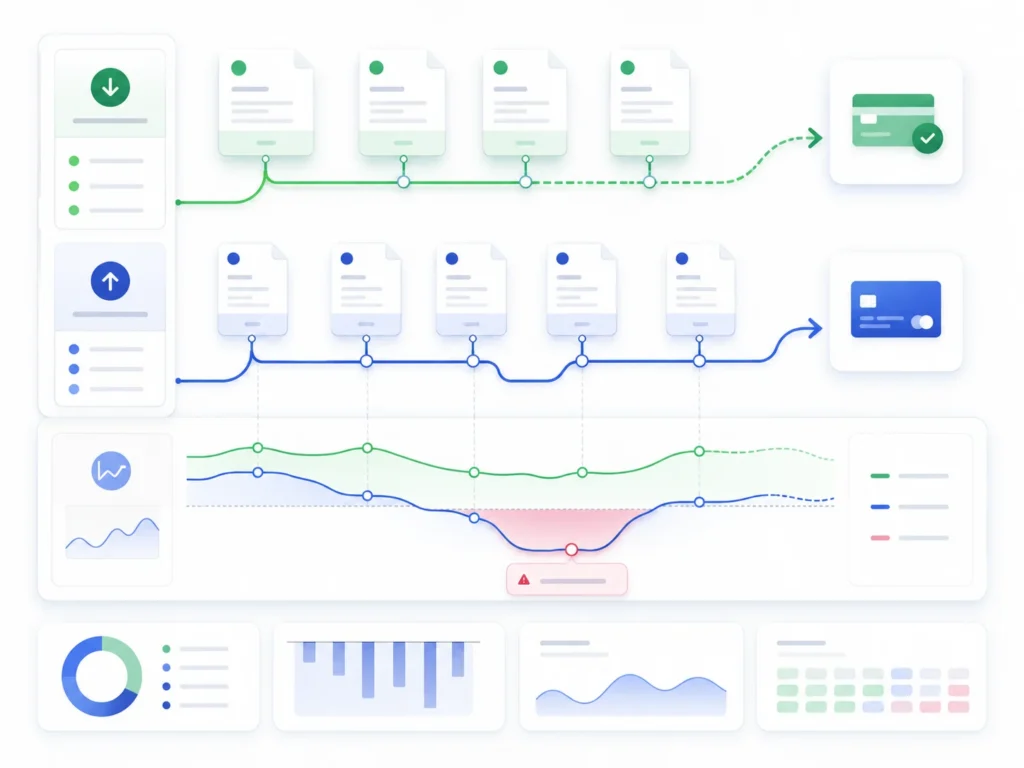
Unexpected cash shortages are among the most stressful problems for an owner. Cash flow keeps catching you off guard.
On paper, the business looks fine. Then a bill lands and the account is short. Payroll is due, but a big customer has not paid yet. Money comes in and goes out at different times, and that timing gap hurts.
This is very common. In the Federal Reserve’s 2024 Small Business Credit Survey, 51% of small employer firms said uneven cash flow was a challenge. 56% said paying operating expenses was a challenge. If you feel the squeeze, you are far from alone.
Notice what this really is. Cash flow trouble is often a timing problem, not a profit problem. The business can be healthy overall. The money just does not line up with the bills. Good books make that timing clear before it turns into a crisis.
A bookkeeper tracks what is coming in and going out. They keep an eye on unpaid invoices. They help you spot a shortfall in advance, not on the day the account runs dry. That early warning gives you time to act, whether that means chasing an invoice or moving a payment.
A simple habit helps here. Many bookkeepers keep a short cash flow view. It looks a few weeks ahead at money due in and bills due out. That small window can prevent a big scramble later.
If cash surprises keep you up at night, do not ignore them. This is one of the clearest signs you need a bookkeeper.
Sign 5: DIY bookkeeping is eating your time
The last sign is about your time. The books are quietly eating too much of it.
You started your business to do your actual work. Not to code transactions late at night. Not to chase receipts on a Sunday. But that is where the hours keep going.
Every hour on the books is an hour you do not spend on customers. It is time away from sales, from your team, or from your family. For a lot of owners, that trade is simply not worth it.
There is a hidden skill cost too. If bookkeeping is not your strength, it takes you longer. You second-guess categories. You fix your own mistakes. The task drags on, and the stress builds up with it.
There is a quiet trap here too. The longer you do the books alone, the more the system lives only in your head. If you ever step away or get sick, no one else can pick it up. A bookkeeper builds a system that someone else can follow.
A bookkeeper can take much of the routine recordkeeping work off your plate. They work faster because this is what they do all day. You get your time back, and you get cleaner books at the same time.
If bookkeeping is eating your nights and weekends, take it seriously. Your time is worth more when it goes back into the business.
What a bookkeeper actually fixes

So what does hiring a bookkeeper actually change? The short version looks like this.
They keep your records current. No more falling months behind, and no more guessing where you stand.
They reconcile your accounts. Your books match your bank, so you can finally trust the numbers.
They give you clear reports. You get a profit and loss statement, a balance sheet, and a cash-flow summary you can actually read.
They help keep your records organized and ready for your tax professional. Your records stay clean all year, so filing is calmer instead of chaotic.
They help you watch cash flow. You see problems early, while you still have room to act.
They give you your time back. You get to focus on running the business, not on the books.
Here is what the work looks like month to month. Your bookkeeper imports and categorizes your transactions. They reconcile each account against the statement. They send you a short set of reports. You get a clear read on the month, without doing the data entry yourself.
Clean records also provide peace of mind. When your records are clean and backed by receipts, you are ready if the IRS or the state ever asks questions. You are not digging through a year of emails at the worst possible time.
One thing to keep clear. A bookkeeper is not the same as a tax preparer or a CPA. Bookkeeping is the daily and monthly work that keeps your records clean and current. Clean books then make tax filing and bigger money decisions far easier. That is why many small businesses use bookkeeping and tax help together. You can learn more about our bookkeeping services and how we support businesses across Allen, TX.
Do you need a bookkeeper in Allen, TX?
Look back at the five signs. Your books are always behind. You cannot get clear numbers. Tax time is a scramble. Cash flow keeps surprising you. The books are eating your time.
One sign may be enough to consider help. Several signs together make a stronger case for hiring a bookkeeper. You do not have to wait until something breaks to bring one in.
So when is the right time to hire? A good rule is to act at the first sign, not the fifth. Waiting until the books are a full year behind only makes the fix bigger and slower. Getting help early keeps the job small and the cost lower.
This article is general information, not individual tax advice. Tax rules change and depend on your situation. For guidance on your business, talk to a qualified bookkeeper, accountant, or CPA.
Book a free bookkeeping consultation
Tax by Lonestar helps small businesses in Allen, TX keep clean, current books. If any of these signs sound familiar, we would be glad to help.
Book a free bookkeeping consultation. We will review where your books stand today and show you what clean bookkeeping could do for your business.
You can start small. There is no pressure and no lengthy form to complete first. The consultation is free and can give you a clearer view of your next step.