
Bank reconciliation for businesses is one of the simplest habits with the biggest payoff. It means checking that your own records match your bank statement. That quick comparison can catch errors, surface signs of fraud, and keep your books accurate. For a small business in Allen or anywhere across Collin County, it is a basic control that protects your money and your numbers. This guide explains what it is, why it matters, and how to do it step by step.
What Reconciliation Is
You keep records of your business transactions. Your bank keeps its own record of what moved through your account. Bank reconciliation is simply the process of comparing the two and making sure they agree.The U.S. Small Business Administration also lists bank reconciliation as one of the key financial tasks a business should manage.
When they match, you have confidence that your books reflect reality. When they do not, the difference points to something worth checking, such as a transaction you missed, a bank fee you did not record, or a charge you do not recognize. The goal is a clean match at the end, with every difference explained.
Why It Matters (Errors and Fraud)
Reconciliation is a small task that does several jobs at once.
- It catches errors. Banks and people both make mistakes. A double charge, a missed deposit, or a transposed number shows up when the two records do not line up.
- It can surface signs of fraud. An unfamiliar withdrawal or a payment you did not authorize can be an early warning. Reconciliation is not a guarantee against fraud, but it is one of the simplest checks a business can run.
- It keeps your books accurate. The IRS explains that good business records help you prepare financial statements, track expenses, complete tax returns, and support the amounts reported on those returns.
Because these statements roll up into your financial reports, reconciliation is part of the foundation. For the bigger picture on why that foundation matters, see our guide on why bookkeeping matters for small businesses.
Step-by-Step Process
Reconciling an account is a short, repeatable routine. Here is the basic sequence.
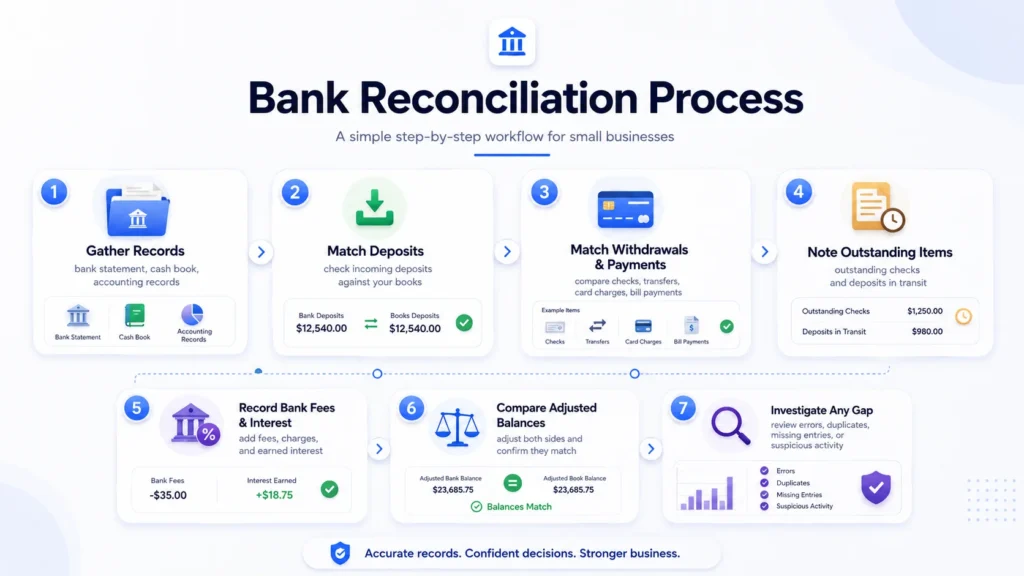
- Gather your records. Get the bank statement for the period and your own books for the same dates.
- Match deposits. Check each deposit on the statement against your records, and mark the ones that agree.
- Match withdrawals and payments. Do the same for money going out, including checks, card charges, and transfers.
- Note outstanding items. Some checks may not have cleared yet, and some deposits may be in transit. Set these aside as timing differences.
- Record bank fees and interest. Add any fees, service charges, or interest from the statement that are not yet in your books.
- Compare the adjusted balances. After timing differences, your records and the statement should match. If they do, you are reconciled.
- Investigate any gap. If the two still differ, work through the transactions until you find the cause. Do not force a match.
A quick example: your books show a balance of $10,200, but the statement shows $10,000. You find a $250 check that has not cleared and a $50 bank fee you had not recorded. Add the fee to your books and account for the outstanding check, and the two balances agree. Difference explained.
How Often to Reconcile
For most small businesses, once a month is the right rhythm. Your bank statement arrives monthly, so reconciling then keeps you current without much effort.
If your account sees a high volume of transactions, reconciling more often, such as weekly, can keep the work manageable and catch problems sooner. The main rule is not to let it pile up. A year of unreconciled statements is a painful project. A single month is a quick one.
Bookkeeping software makes this easier by matching many transactions for you. Still, review its work rather than trusting it blindly, since transfers, owner transactions, and unusual charges can be matched incorrectly. The software speeds up the routine, but your review is what catches the exceptions.
Common Discrepancies
Most differences fall into a handful of familiar buckets. Knowing them makes reconciliation faster.
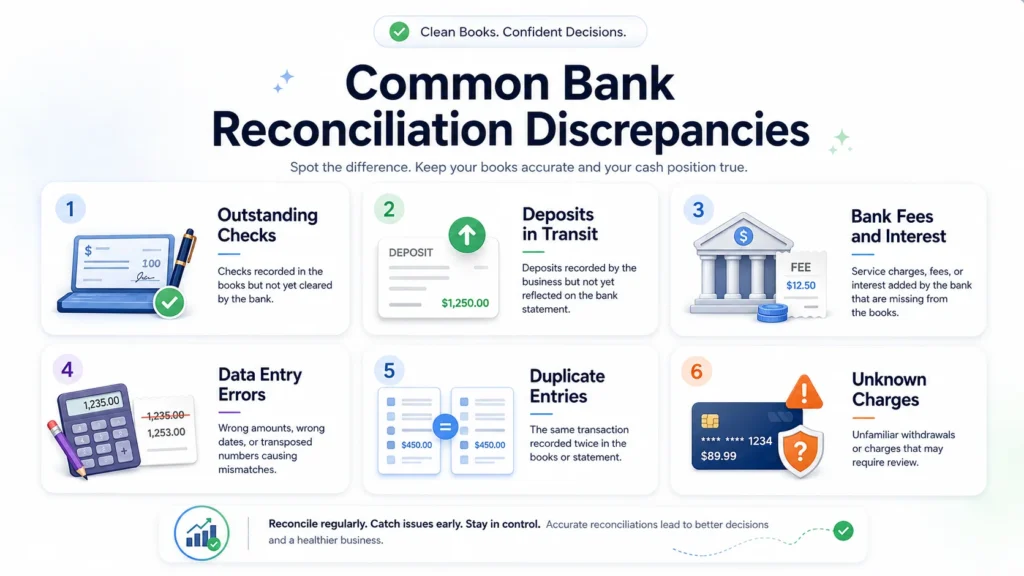
- Outstanding checks. Checks you wrote that have not cleared the bank yet.
- Deposits in transit. Money you recorded that the bank has not posted yet.
- Bank fees and interest. Service charges or interest that appear on the statement but not yet in your books.
- Data entry errors. A transposed number or a wrong amount typed into your records.
- Duplicate entries. The same transaction recorded twice.
- Unknown charges. Anything you do not recognize is worth investigating right away. Contact your financial institution promptly if you find an unusual or unauthorized transaction.
When you find a discrepancy, do not simply adjust your books to force a match. Trace it to its cause first. A forced match hides the very problems reconciliation is meant to reveal, whether that is a simple typo or something that needs a closer look.
Let Us Handle It
Reconciliation is not hard, but it is easy to postpone when you are busy running the business. That is often when small errors slip through. A bookkeeper can take it off your plate and keep every account current.
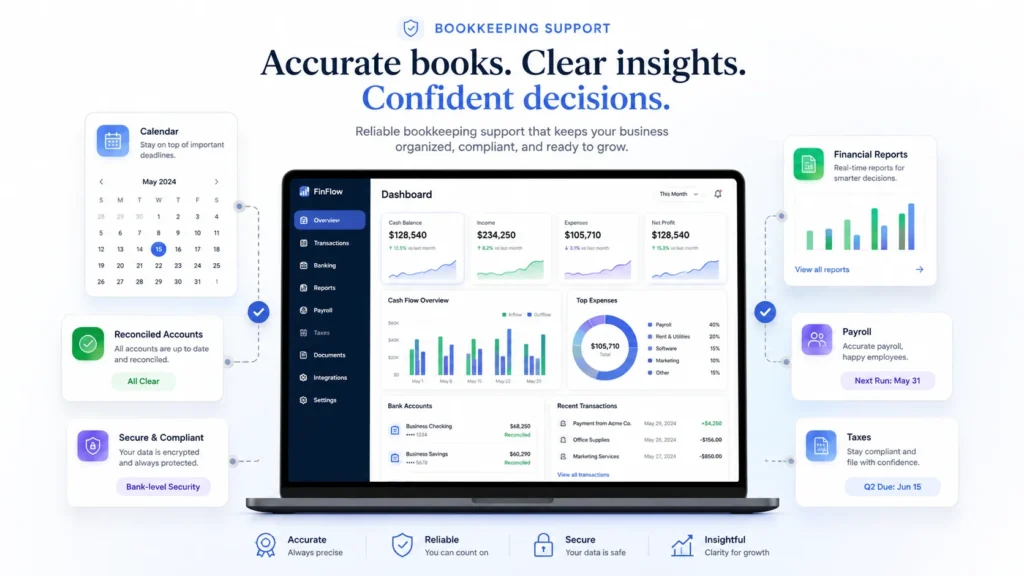
At Tax by Lonestar, our bookkeeping services include regular reconciliation for small businesses in Allen and the surrounding Collin County area. We also handle tax preparation and payroll, so your accounts, reports, and filings stay connected.
How often should an Allen small business reconcile its accounts? Monthly is a good default, right after the statement arrives. Higher-volume businesses may reconcile weekly to keep things current.
Book a free bookkeeping consultation and let’s keep your accounts reconciled and clean. Schedule your consult.
This guide is general information, not tax or accounting advice. Processes and controls vary by business. Please talk to a qualified professional about your situation before you act.