Why bookkeeping matters for small businesses comes down to one thing: clarity. Clean, current books help you see whether you are making money, where it is going, and what the business may be able to afford next. Monthly bookkeeping, kept up as you go, is how you get that clarity without a year-end scramble.
We will look at what bookkeeping really gives you, the basics every owner needs, how clean books lead to better decisions, and how they keep you ready for cash-flow surprises and tax time. If you have been treating bookkeeping as an afterthought, this is a good place to rethink it.
Think of bookkeeping as the foundation everything else sits on. Your taxes, your decisions, your loan applications, and your peace of mind all rest on it. When the foundation is solid, the rest gets easier. When it is shaky, every financial task becomes harder than it needs to be.
What Bookkeeping Really Gives You
Bookkeeping is the practice of recording and organizing your business transactions. Every sale, every expense, every payment. Accounting then builds on those records to interpret the numbers, and tax preparation uses them to file your return. It all starts with good books.
Done well, bookkeeping gives you answers to questions you should be able to answer at any time:
- Are you actually profitable this month?
- How much cash do you really have?
- Where is your money going?
- Which customers, projects, products, or services bring in the most revenue, if your bookkeeping system tracks them separately?
- Are you ready to file taxes without a scramble?
A monthly rhythm is what makes this work. When you update your books each month, the answers stay close at hand. When you wait until year-end, you have less reliable information available during the year. That is why monthly bookkeeping, not once-a-year cleanup, is the habit worth building.
When bookkeeping slips, the costs are quiet but real. Missed deductions. Decisions made too late. A surprise tax bill. A scramble every filing season. None of these show up as a single line on a statement, which is part of why they get ignored until they hurt. Good books turn those hidden costs into things you can see and manage.
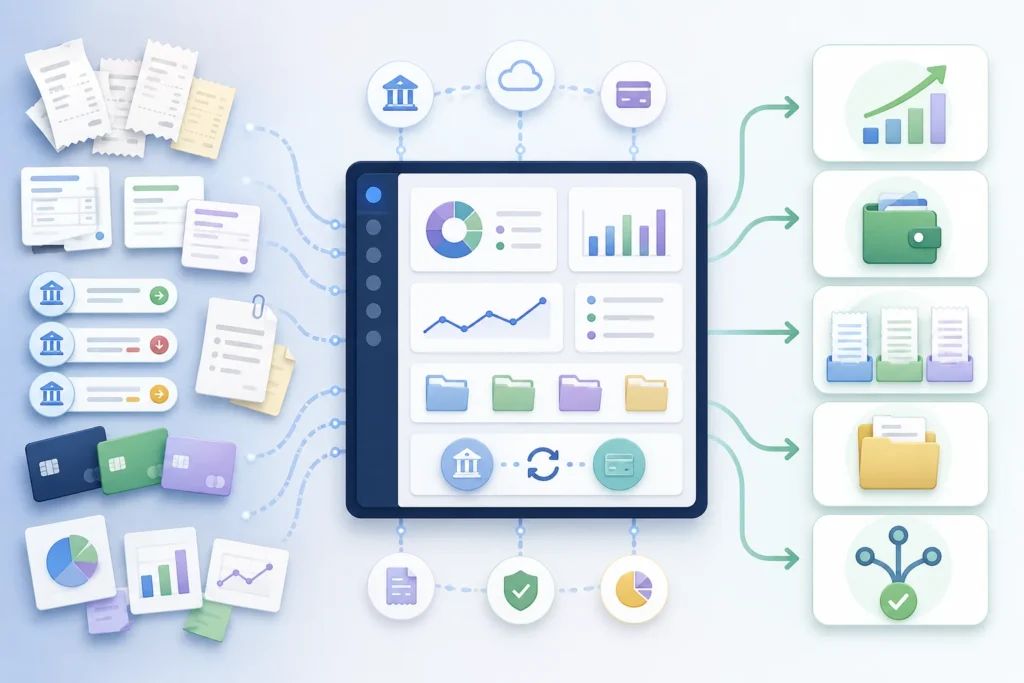
There is an outside benefit too. When you apply for financing, a lender may request financial statements, tax returns, debt information, projections, and other records. Clean books mean you can hand over a real profit and loss statement and balance sheet instead of stitching them together at the last minute. Having current reports can reduce delays when a lender requests financial information.
Perhaps the biggest thing bookkeeping gives you is confidence. When you know your numbers, you stop guessing and second-guessing. You can answer a lender, a partner, or the IRS without a knot in your stomach. That steadiness is hard to put a price on, and it comes straight from records you can trust.
The Basics Every Owner Needs
You do not need an accounting degree to keep good books. A few basics cover most of what a small business needs.
- Separate business and personal money. Use a business bank account and card so your records stay clean.
- Record income and expenses. Capture every transaction, not just the big ones.
- Categorize consistently. Use the same categories each month so your reports make sense.
- Reconcile monthly. Check that your books match your bank and card statements.
- Keep your records. Save receipts, invoices, and statements in an organized way.
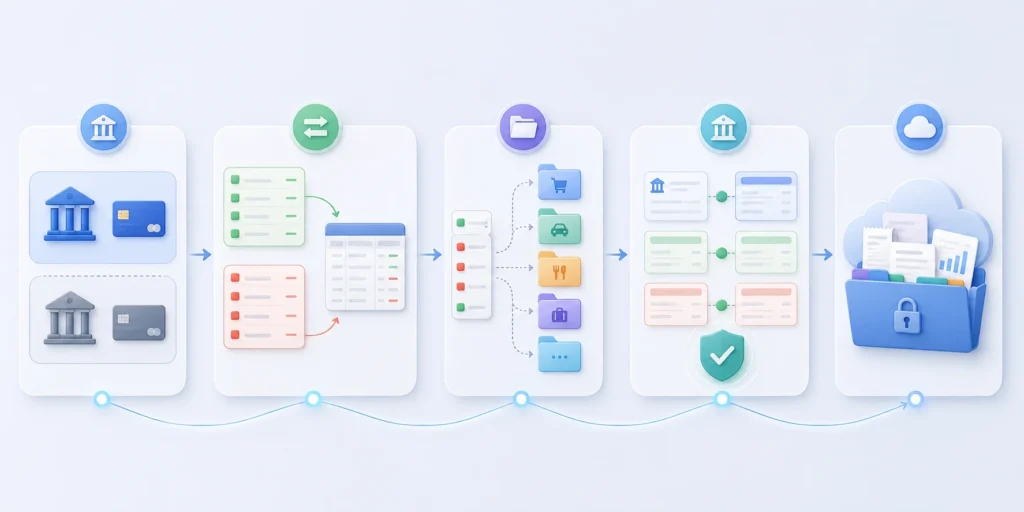
One early choice is your accounting method. Cash basis records income and expenses when money changes hands. Accrual basis records them when they are earned or owed. Many small businesses use cash basis because it is simpler. Whichever permitted method you use, apply it consistently, since changing an established method later may require IRS approval.
Two reports pull it all together. Your profit and loss statement shows income minus expenses over a period, so you can see whether you are making money. Your balance sheet shows what you own and what you owe at a point in time. A cash flow statement adds a third view, tracking the actual cash moving through the business. Together they tell its story. For a deeper walkthrough, see our guide to organizing business expenses and records.
The habit is easier than it sounds. A simple monthly routine keeps everything current:
- Import or enter the month’s transactions.
- Categorize anything not yet sorted.
- Reconcile against your bank and card statements.
- Review your reports and note anything unusual.
Set aside a fixed time each month. A regular routine can keep the workload smaller than a year-end cleanup.
Better Decisions from Clean Books
Here is where bookkeeping earns its keep. Clean books are not just for the IRS. They are information you can act on.
With current numbers, you can:
- Price with more confidence, because you know your real costs.
- Catch a rising expense before it eats your margin.
- Judge whether you can afford to hire.
- Compare the performance of products, services, or projects when your records track their revenue and related costs separately.
- Time a big purchase for when cash allows.
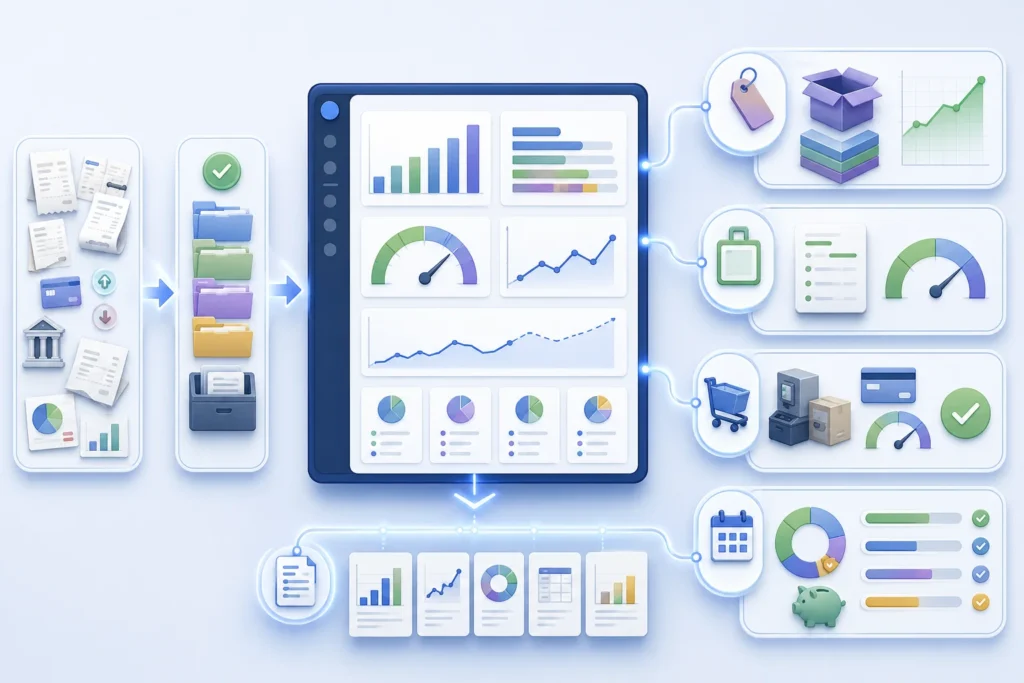
Think about a small service business weighing its first hire. A gut feeling says business is busy, so it must be time. Clean books tell the fuller story: what the margin really is, how steady the revenue has been, and whether the cash is there to cover a new salary through a slow stretch. The books do not make the call, but they make it an informed one.
Pricing is another place clean books help. If you do not know your true cost to deliver a product or service, you are guessing at your price. Books that track materials, labor, and overhead show you the real number, so you can price to make a profit rather than hoping one is in there somewhere.
Clean books also make planning possible. Once you can see last year clearly, you can build a simple budget for the year ahead and check your progress against it each month. A budget without records is a wish. A budget backed by real numbers is a plan.
They surface small problems before those problems grow. A customer who is slow to pay. A subscription you forgot you were on. A supplier whose prices crept up. On their own, each is minor. Monthly review can help you spot these issues earlier, when they may be easier to address. Ignored for a year, they quietly drain the business.
One distinction helps here: profit is not the same as cash. Your profit and loss statement can look healthy while your bank account is tight, often because of timing. Clean books show both, so you are not caught off guard. Comparing this month to last month, or this year to last year, turns your books into a simple dashboard for the business.
Cash Flow and Tax Readiness
Two payoffs deserve their own section: cash flow and tax readiness.
Cash flow is the timing of money moving in and out. A profitable business can still run short if customers pay late or a large bill lands at the wrong time. Current receivables (your unpaid invoices) and payables (your unpaid bills) can reveal upcoming pressure. A short cash-flow forecast that includes expected collections, bills, payroll, debt payments, and other cash needs can show whether a shortage may be approaching.
Invoicing discipline supports cash flow. Send invoices promptly, state clear due dates, and follow up on late ones. Your books show which invoices are outstanding and how old they are, so you know exactly where to focus. Getting paid faster is one of the simplest ways to ease a cash squeeze.
Seasonal patterns depend on the industry. An Allen retailer may prepare for holiday demand, while a construction, restaurant, or professional-service business may experience a different cycle. Review your own monthly history before building a cash plan. Monthly books help you plan for quiet stretches and set aside cash while times are good.
One practical habit helps here: set aside money for taxes as you earn, rather than hoping it is there in April. Because your books show your income and profit through the year, you can move a share into a separate account each month. The same goes for a small cash reserve, which can carry you through a slow stretch without stress.
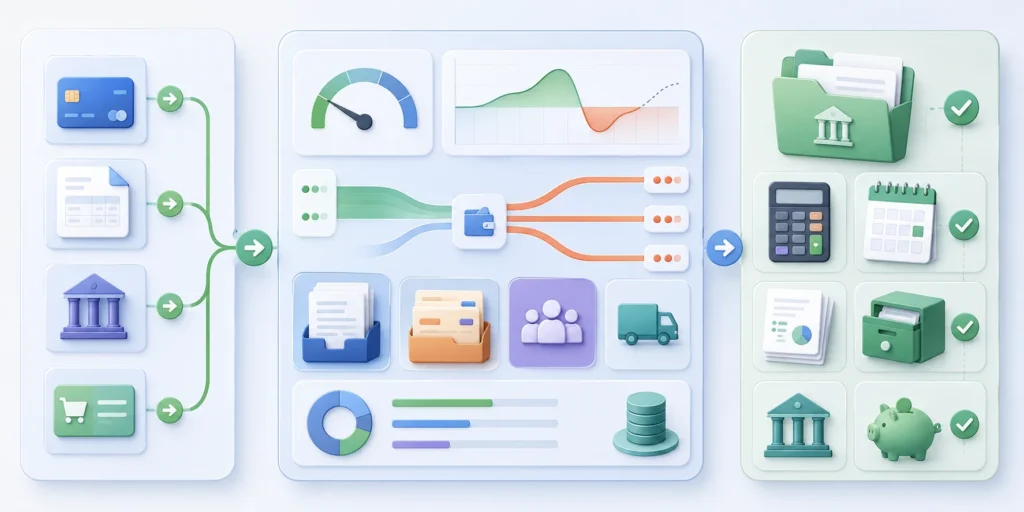
Tax readiness is the other payoff. When your books are current, filing is smoother and your deductions are supported. Current books give you a stronger starting point for estimated-tax planning, though your final quarterly estimated tax calculation may also include other income, deductions, credits, withholding, and self-employment tax. That may help reduce the risk of an underpayment penalty when the full estimate is calculated correctly. Our guide on how accurate bookkeeping makes tax season easier goes deeper on this.
There is a Texas angle worth noting. Texas has no personal state income tax, so for many owners the income-tax focus is federal. For the 2026 Texas franchise-tax report year, the no-tax-due threshold is $2.65 million in annualized total revenue. Entities at or below that threshold generally do not file a No Tax Due Report, but they normally still file a Public Information Report or Ownership Information Report. Clean books make either one easier. And remember that tax season is not just an April event. Depending on your entity, some returns are due earlier in the year.
Signs You Need Help
How do you know when to bring in help? A few signs are common.
- You are behind on your books and cannot catch up.
- You cannot say what you earned last month.
- Your bank balance is the only way you measure the business.
- You dread opening your accounting file.
- You are adding employees or taking on payroll.
- The business is growing faster than your systems.
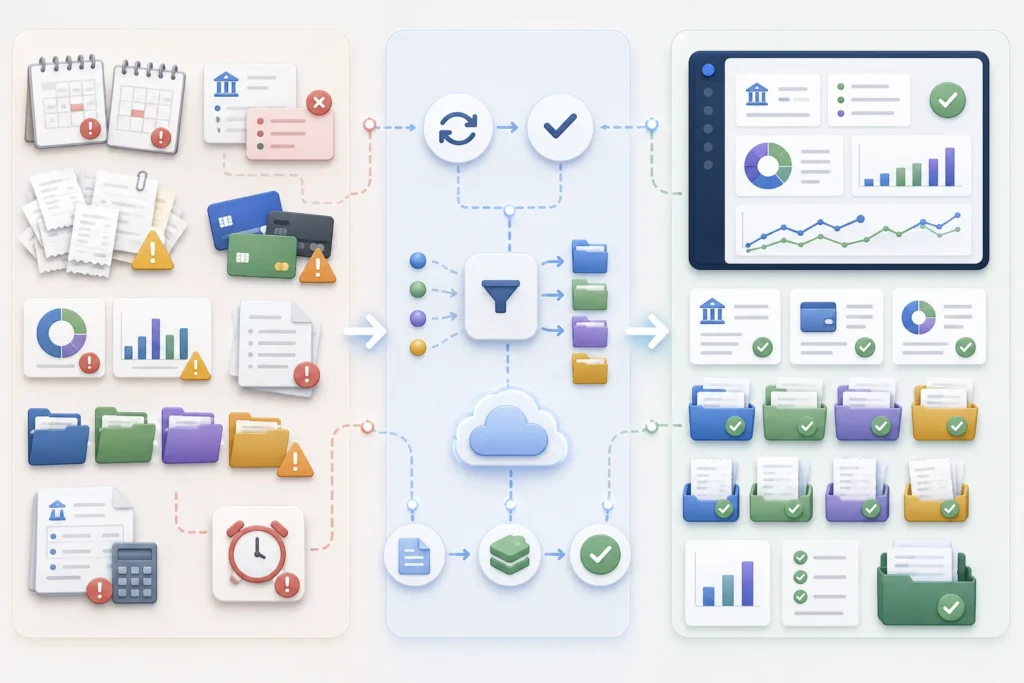
There is also the simple matter of time. Every hour you spend sorting receipts is an hour you are not selling, serving customers, or resting. For many owners, handing off the books is less about the numbers and more about getting that time back.
It helps to know who does what, though the roles often overlap. Bookkeepers often record transactions, reconcile accounts, manage receivables and payables, and prepare regular reports. Accountants may also perform those tasks, while providing more advanced reporting, analysis, or advisory work. Tax preparers focus on preparing and filing returns, although one professional or firm may provide several of these services.
These signs do not necessarily mean you failed. They may indicate that the business has become more complex, your available time has changed, or the current system no longer works well. A bookkeeper or an accounting firm can take the work off your plate and keep your numbers reliable. Day to day, that often means recording transactions, reconciling accounts, sending reports, and flagging issues before they grow. For a closer look, see our post on the signs you need a bookkeeper.
Work With Us
Bookkeeping matters because it turns a busy month into a clear one. You see your profit, your cash, and your tax position, and you make decisions with real information behind them. That clarity is the payoff of a steady monthly habit, and it compounds over time as each clean month builds on the last.
At Tax by Lonestar, we help small businesses across Allen and North Texas maintain organized books and prepare tax returns from complete, well-supported records. Keeping bookkeeping and tax preparation with one team can reduce handoff gaps and help the preparer understand how the records were maintained. If clean books have felt out of reach, they do not have to be. Learn more about our bookkeeping services.

Book a free bookkeeping consultation and let’s talk about where your books are today. Schedule your consult.
This guide is general information, not tax or accounting advice. Rules change and depend on your situation. Please talk to a qualified professional about your business before you act.